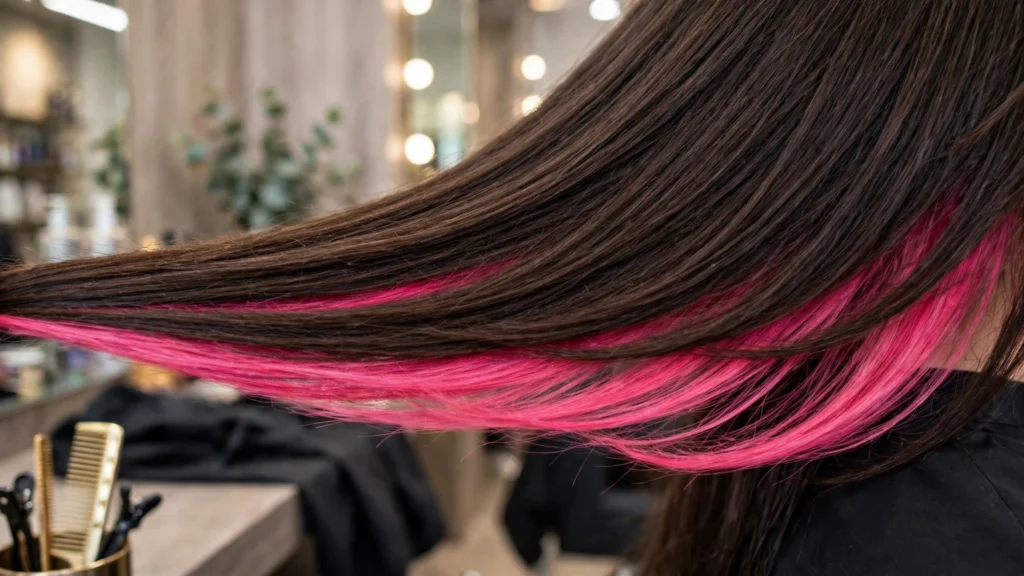
Pink peekaboo hair is exactly what it sounds like: bright pink color hidden underneath the top layer of your hair. When your hair is down, you catch just a hint of pink at the ends or when it moves. Pull it up into a ponytail or tuck it behind your ear, and the color shows itself. That little reveal is why the look keeps going viral. It is bold without being all over your face, and it works on almost any hair length, from a bob to long layers.
Peekaboo pink suits more people than a full head of pink. Because the color sits underneath, it frames the face softly instead of taking over. It looks especially good on dark hair, where the contrast makes the pink pop, but it also works on blonde and light brown hair for a softer, pastel effect. If you like experimenting but want something you can hide for work or school, this is one of the easiest ways to try a vivid color. Hot pink and magenta are bright and playful, while dusty rose and pastel pink feel softer and more wearable day to day. Cooler pinks tend to flatter cool skin tones, and warmer, coral-leaning pinks suit warm skin tones, but there are no strict rules. Try holding a pink fabric near your face to see what you like.
The safest way to get the look is at a salon. A colorist will section off the underlayer, lighten it if needed, and apply the pink evenly, so you get clean color with no patchy spots. This matters most if your hair is dark, because pink dye alone will not show up well on dark hair. The underlayer usually needs to be lightened first. At home, temporary options are a good low-commitment test. Semi-permanent pink dyes, color-depositing conditioners, and hair chalks wash out over a few shampoos, so you can try the look for a weekend. They work best on light or pre-lightened hair. Box dyes that promise permanent pink are harder to get right and harder to remove, so if you want a lasting result, a salon visit is worth the cost.
Pink fades faster than most colors, so aftercare makes all the difference. Wash your hair less often, and use cool or lukewarm water, because hot water opens the hair cuticle and lets color escape. Use a sulfate-free shampoo made for color-treated hair. A color-depositing conditioner in a matching pink shade once a week can top up the color between salon visits. Heat styling also fades pink, so use a heat protectant and keep your tools on a lower setting. When pink does fade, it usually softens into a pretty pastel first, so the grow-out is gentle.
Bleach is the part of this look that needs the most caution. If your hair is already damaged, very dry, breaking easily, or has been bleached or chemically straightened recently, skip the lightening step. Adding more bleach to fragile hair can cause serious breakage. The same goes if your scalp is irritated or has cuts or sores. Wait until it has fully healed. If you have had a bad reaction to hair color before, or you are unsure how your hair will handle bleach, ask a stylist to do a strand test first. You can still enjoy the trend without bleach. On dark hair, a deeper magenta or a pink gloss can give a subtle tint without lightening. When in doubt, choose the gentler option. You can always go brighter later.